Life doesn’t always go exactly as planned – and that is often where the most valuable learning happens.
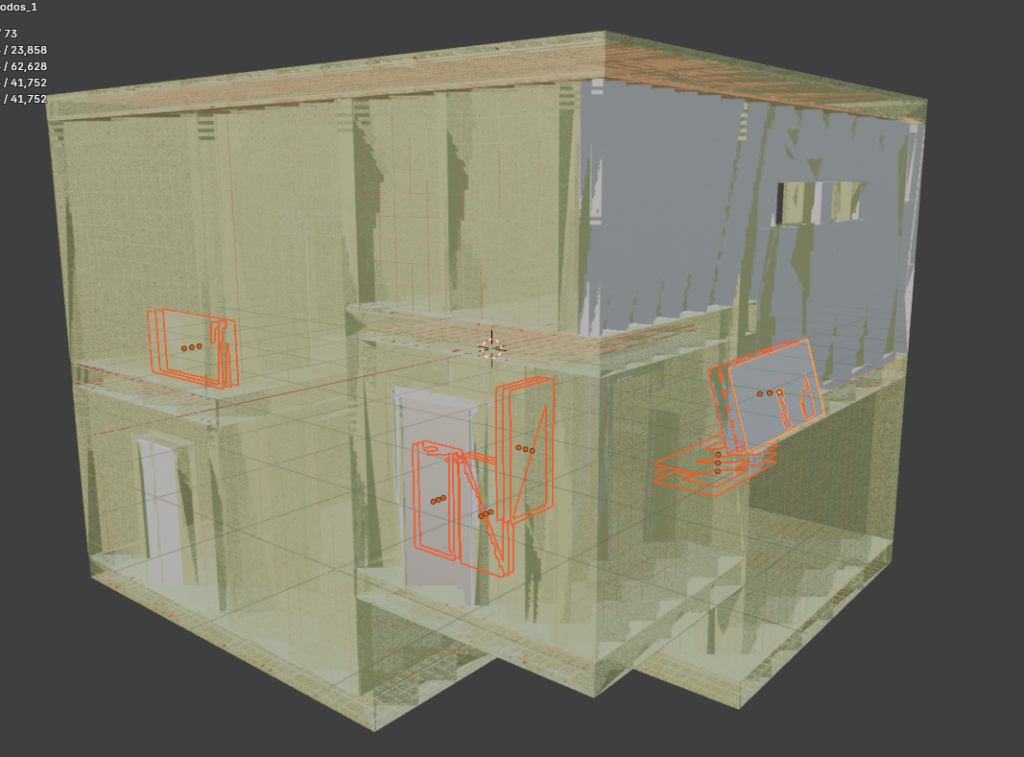
At Binckhorst Kindergarten, GScan prepared a muon tomography measurement campaign using the available design drawings and accessibility information. However, the real measurement results did not fully meet expectations, mainly because too few muon tracks passed through the large volume of interest.
Last-minute detector position changes were required to keep the equipment safely out of children’s reach. These changes affected the passing muon flux more than anticipated. As a result, even with six detectors and almost two months of measurements, GScan was able to identify structural elements and some rebars, but could not reliably determine the condition of hidden structural elements.
Since April 2023, GScan’s technology has proven valuable in bridge and tunnel assessments. Existing buildings, however, introduce new uncertainties, particularly when detector placement is limited by real-life site conditions. This case has helped us better understand those challenges and improve our approach.
GScan is now focusing on identifying more optimal detector positions and carrying out more advanced simulation studies to reveal the full potential of muon tomography for assessing existing buildings. The results will be uploaded to the SUM4Re C-BIM environment and used to demonstrate the capabilities of the SUM4Re approach.